 AT-A-GLANCE 2027 Planner GC4700727
Deal
Check price on Amazon 
Updated Monday, October 26, 2026 · 17 deals · newest first. Tap a code to copy it, then open the deal for how to apply it.
Paper still wins for a lot of people who like to see a whole week at a glance, and this page gathers the planner deals we track on Amazon in one place. You will find academic-year books that run July to June, compact pocket calendars that cover several years, refill inserts for disc-bound systems, and even a touchscreen wall organizer for busy households.
Browse the list by layout first, then by size and binding, because those choices matter more than the cover. Where a seller promo code is listed, copy it before checkout, and look for a clip coupon on the product page. We refresh the list often, so a format that is not discounted today may show up next week.
AT-A-GLANCE 2027 Planner GC4700727
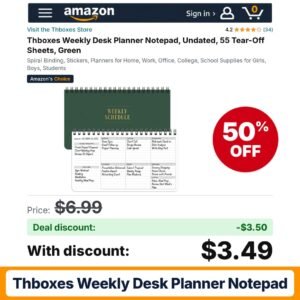 Thboxes Weekly Desk Planner Notepad
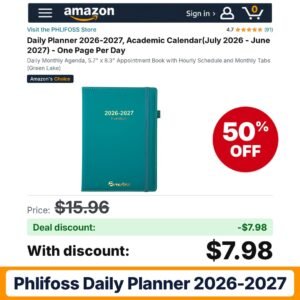 PHLIFOSS Daily Planner 2026-2027
 AT-A-GLANCE 2025 Planner
 Moleskine Classic 12 Month 2024 Weekly Horizontal
 Level Up RN Nursing School Study Planner
 AT-A-GLANCE Planner 2025-2026 Academic YP905A09
 AT-A-GLANCE Planner 2025-2026 Academic EL39-901A
 Tersus 2027 Planner
 AT-A-GLANCE 2027 Planner Black 7″ x 8.75″
 Indeme 2026-2027 Planner
 MaaIbok 2026-2027 Planner purple
 CRANBURY 2026-2027 Planner 8.5×11
 AT-A-GLANCE 2027 Planner 13-Month
 MaaIbok 2027 Planner
 Lang, Heart and Home by Susan Winget
 Anyuse16″ Smart Digital Calendar Wall Desk Mount
The best planner is the one you open every day, and that has less to do with the cover and more to do with how the pages are laid out. Before you compare deals, think about what you are trying to track. Students juggling assignments need room for daily notes, parents coordinating schedules want a shared monthly view, and anyone setting long-range goals may prefer a calendar that spans more than one year. Starting from your routine keeps you from buying a pretty book that ends up in a drawer by February.
Ask yourself three quick questions. Do you plan by the week, by the month, or both? Will the planner live on a desk, in a backpack or in a pocket? And do you want a fresh book each year, or a system you can refill? Your answers point directly to one of the styles below.
The listings here fall into a handful of clear groups. Academic planners, such as the weekly and monthly books from brands like Cranbury, start in July and finish in June, which lines up with the school calendar. Calendar-year planners run January to December. Multi-year pocket calendars, such as the three-year monthly options from brands like Booqool, trade daily space for portability. Disc-bound refill inserts, such as the dated monthly packs from BetterNote, let you swap pages into a binder you already own. Finally, digital wall calendars, such as the touchscreen organizer from Anyuse, move the family schedule onto a screen that syncs with online calendars.
| Type | Best for | What to check |
|---|---|---|
| Academic weekly and monthly | Students, teachers, school-year families | Exact start and end months, tab style, page count |
| Calendar-year planner | Work schedules and personal goals | Whether it begins in January or is undated |
| Multi-year pocket calendar | Long-range dates, purses and jacket pockets | Years covered, monthly-only layout, trim size |
| Disc-bound refill inserts | People who already own a disc system | Disc count, page size, paper weight |
| Digital wall calendar | Shared household schedules and chores | Calendar sync support, screen size, mounting options |
Planner titles pack in a lot of numbers, and it pays to read them slowly. The date range is the most important one: two books that both say "2026-2027" can cover completely different months. Confirm the first and last month printed on the listing so you are not left with a gap in your schedule.
Next, check the trim size. Listings on this page range from compact pocket formats to full letter-size books. A smaller planner travels easily but leaves little room for writing, while a larger one gives you space for lists and notes at the cost of a heavier bag. If you are buying refill inserts, the size and disc count must match the binder you already have, or the pages will not line up.
Covers on this page include hardcovers, faux leather wraps and softer flexible covers. A hardcover holds up in a backpack and gives you a firm surface to write on without a desk. Flexible covers are lighter and fold more easily. Binding matters too: spiral or twin-wire books lie flat and can fold back on themselves, while sewn or glued bindings look tidier but may not open fully flat. Disc-bound systems let you remove and rearrange pages whenever you like.
If you choose a digital wall calendar, set aside time for setup. Plan where it will hang or stand, confirm there is a power source nearby, and link the calendar accounts the whole household uses. A screen only helps if everyone adds their events to the same shared calendar.
Planners follow the calendar more closely than almost any other category. Academic planners see a wave of discounts around back-to-school season in July and August, when sellers compete for students. Calendar-year books are often marked down after the holidays and into January as sellers clear stock, which is a good moment for anyone who does not mind starting a few weeks late. Prime Day in July and Prime Big Deal Days in October can also bring planner promotions, and Black Friday and Cyber Monday are worth watching for gift-ready designs and digital organizers.
Planner discounts usually come in two forms. A seller promo code is a short code you enter at checkout, and a clip coupon is a box on the product page that you tick before adding the item to your cart. On many listings both can apply to the same order, but sellers decide the terms, so always read the fine print under the coupon or promotion. Subscribe and Save is rare for dated paper goods, though it can appear on refill packs or general stationery.
To confirm the real total, add the planner to your cart, enter the code in the gift card and promo field on the checkout page, and look for a separate line showing the savings before you place the order. If the discount does not appear, double-check the eligible variant, since a code may apply only to one color or size.
Spend a minute on these points and the planner you buy will fit both your schedule and your budget, whether it is a slim pocket calendar or a full family command center.
An academic planner usually runs from July through June so it follows the school year, while a regular planner covers January through December. Check the exact months printed in the listing title, because two planners labeled with the same years can start and end at different times.
Academic planners tend to see the most promotions during back-to-school season in July and August, and calendar-year planners are often cheaper after the holidays as sellers clear stock. Prime Day, Prime Big Deal Days and Black Friday can also bring planner discounts worth checking.
Often you can, but it depends on how the seller sets up each promotion. Clip the coupon on the product page first, then enter the code at checkout. Before ordering, look for both savings lines in your order summary to make sure each one was applied.
Compare the page size and the number of discs or rings listed for the inserts with your current binder. Disc-bound inserts are made for specific sizes, so a small insert will not line up in a larger system. When in doubt, measure one of your existing pages.
A digital wall calendar suits households that want one shared schedule that syncs with online calendars, while a paper planner is better for personal, portable planning. Check which calendar services the screen supports and where you will mount it before choosing between the two.
As an Amazon Associate, FindsCheaper earns from qualifying purchases. Promo codes and coupons are set by sellers, can sell out or end early, and the final price is always the one shown in your Amazon cart.