
How to Bolt Down a Gun Safe: Concrete, Wood, Walls and Cars

To bolt down a gun safe, put it where it will stay, mark the factory anchor holes on the floor (or wall), drill pilot holes sized to the anchors the manual calls for, then fasten the safe with concrete wedge anchors on a slab or long lag bolts driven into floor joists or wall studs. Tighten everything from inside the safe so no bolt heads are exposed. Small portable lockboxes that have no anchor holes are secured a different way: with a steel cable looped around something that cannot be moved, which is how most people secure a gun safe in a car or a rented apartment.
That short answer covers most situations, but the details decide whether the safe stays put or simply slides out the door on a dolly. Below we walk through choosing the spot, matching hardware to your floor, anchoring to walls, what renters can do, how to handle vehicles, and three cable-secured portable cases that show the alternative approach. This guide is based on manufacturer manuals and listings plus general installation practice, not on our own installs.
Why anchoring a gun safe matters
Most burglaries are quick. A safe that is not anchored can be tipped onto a hand truck, rolled out, and opened later with time and tools. Even a heavy cabinet can be walked out by two people. Anchoring removes that option and forces anyone after the contents to work on the safe where it stands, which is slower, louder and far more likely to fail.
Anchoring also prevents tipping. Tall gun cabinets and rifle safes have a high center of gravity, and a loaded door swinging open can pull a narrow unit forward. Bolting it down, or to the wall, reduces that risk around children and pets. Many manufacturers state that their warranty or burglary protection assumes the safe is anchored, so read your manual’s anchoring section before you start.
Before you drill: pick the right spot
Placement is the step most people rush, and it is hard to undo once there are holes in the slab. Walk through this checklist first.
- Door swing and access: Make sure the door can open fully, including past any handle, and that you can reach the keypad, dial or fingerprint reader comfortably.
- Corners and walls: Setting a safe in a corner with its sides close to the walls limits pry access to the sides and back.
- Floor type: Concrete slab, wood joists over a crawlspace, or a second story all call for different hardware.
- Hidden utilities: Check for radiant heat tubing, plumbing, gas lines and electrical runs beneath the floor or inside the wall. A stud finder with AC detection helps on walls; for slabs, look at building plans if you have them.
- Post-tension slabs: Some newer homes use post-tensioned concrete with high-tension steel cables in the slab. Drilling into one can be dangerous and costly. Look for a stamped warning near the garage or foundation, and ask your builder or a contractor if you are unsure.
- Moisture: Basements and garages can be damp. Plan for a dehumidifier and keep the safe off bare, wet concrete with a mat or shims as the manual allows.
- Visibility: A safe that cannot be seen from a window or the front door draws less attention. Our hidden gun safe guide covers more discreet options.
Anchoring methods by surface
The table below summarizes how the common surfaces compare. Always follow the hardware size and torque guidance in your safe’s manual; it overrides any general rule.
| Surface | Typical hardware | Holding strength | Notes |
|---|---|---|---|
| Concrete slab | Wedge anchors or sleeve anchors with washers | Highest | Use a hammer drill and masonry bit; check for post-tension cables and heat tubing |
| Wood floor over joists | Long lag bolts into joists, or through-bolts with a backing plate below | Good when hitting joists | Subfloor alone holds very little; locate joists first |
| Wall studs | Lag screws through the back into studs | Moderate, best as a supplement | Good for tip prevention on tall cabinets and wall-mounted pistol safes |
| Inside furniture | Wood screws or bolts through a nightstand or cabinet base | Limited by the furniture | Better than nothing for small safes; the furniture becomes the weak point |
| Vehicle | Steel cable around the seat frame or a maker’s mounting bracket | Deters grab-and-go theft | Avoid drilling near wiring, airbags or fuel lines; follow the vehicle and safe instructions |
How to bolt down a gun safe to a concrete floor
Concrete gives the strongest result, which is why most large safe manufacturers recommend it. The general process looks like this:
- Empty the safe and remove shelves so you can reach the floor holes. Move the safe into final position.
- Mark the holes. Use a long marker or a center punch through the factory holes. Some people drill a shallow starter hole through the safe’s holes to transfer the position exactly.
- Move the safe aside if you need room to drill straight, then drill to the depth the anchor maker specifies, plus a little extra for dust. A hammer drill with a carbide masonry bit is the standard tool.
- Clean the holes with a vacuum or blow-out bulb. Dust left in the hole weakens the anchor’s grip.
- Reposition and level. Use shims under the safe if the floor is uneven so the door closes properly.
- Set the anchors through the safe into the floor, add washers, and tighten to the recommended torque. Do not over-tighten wedge anchors, which can crack the slab near the edge.
- Cover the holes with the factory plugs or carpet, then reinstall shelves.
If your safe came with its own anchor kit, use those parts. Kits sold by safe brands, such as the Liberty anchoring kit people search for, are matched to that brand’s hole size. If you are buying hardware separately, match the bolt diameter to the factory holes rather than drilling them larger.
Watch: thesafewarehouse walks through the steps of bolting a safe down.

How to anchor a gun safe on a wood floor
On a wood floor, the subfloor is too thin to hold much on its own. The goal is to hit the joists underneath. Find them with a stud finder, by looking at nail lines in the subfloor, or from the basement or crawlspace below. If the factory holes do not line up with a joist, you have two options: shift the safe slightly so at least two holes land on framing, or through-bolt the safe with large washers or a steel or plywood backing plate underneath the floor.
Use lag bolts long enough to pass through the safe floor, the subfloor and well into the joist. Pre-drill pilot holes so the wood does not split. On upper floors, also consider weight. A small or mid-size safe is usually fine, but very heavy safes on upper levels may call for a contractor’s opinion on load. Our guide to what size gun safe you need can help you avoid buying more weight than your space can handle.
How to mount a gun safe to a wall
Wall mounting serves two purposes: tip prevention for tall cabinets and full mounting for small pistol safes. For a tall rifle safe or gun cabinet, add bolts through the back into at least two studs even when the base is anchored. This keeps the unit from pitching forward when the door is open.
For the best wall mounted pistol safe setups, the safe hangs on studs or sits between them. Surface-mounted units bolt through the back into studs; in-wall units fit between studs and are secured to the framing on each side. Drywall anchors alone are not a security mount. If wall storage interests you, compare options in our in-wall gun safe guide and look at gun cabinets for long guns. Rifle-specific products, like the Hornady RAPiD wall mount for long guns people search for, have their own mounting instructions, so follow those exactly.
How to secure a gun safe in an apartment
Renters face a real trade-off: drilling into floors or walls may break the lease. Start by asking your landlord in writing. Many will allow a few anchor holes if you agree to patch them when you move out. If drilling is not allowed, these options help:
- Cable to fixed structure: Loop a steel security cable around a pipe, a bed frame bolted together, or another heavy fixed object. This is the main method for portable lockboxes.
- Bolt into furniture: Anchoring a small safe inside a heavy nightstand or closet cabinet makes it harder to carry off. See our nightstand gun safe picks for models designed for this spot.
- Closet placement: A closet corner hides the safe and limits pry angles.
- Smaller footprint: A compact unit is easier to hide and to cable. Our small gun safe roundup lists options sized for apartments.
How to secure a gun safe in a car
Vehicle storage relies on cables or dedicated mounting brackets, not floor bolts. The most common approach is to loop the safe’s steel cable around the seat frame or seat rail bracket, then lock the cable inside the case so it cannot be slipped off. Some brands sell vehicle mounts and door mounts, such as the Vaultek universal car mount and AR door mount that show up in searches; if you use one, follow the maker’s fit list and instructions for your vehicle.
Avoid drilling into your vehicle unless you know what is behind the panel. Wiring harnesses, airbag modules and fuel lines run under seats and carpet. Keep the case out of sight, under the seat or in the console, and remember that a cable deters a quick smash-and-grab but will not stop someone with cutting tools and time. Our best car gun safes and portable gun safe guide compare more vehicle-friendly cases.
Portable safes that secure with a cable
When bolting is not possible, a portable lockbox with a steel cable is the practical choice. These three listings show the range, from a simple key-locked steel box to a polymer case with a fingerprint reader.
Hornady Lockbox
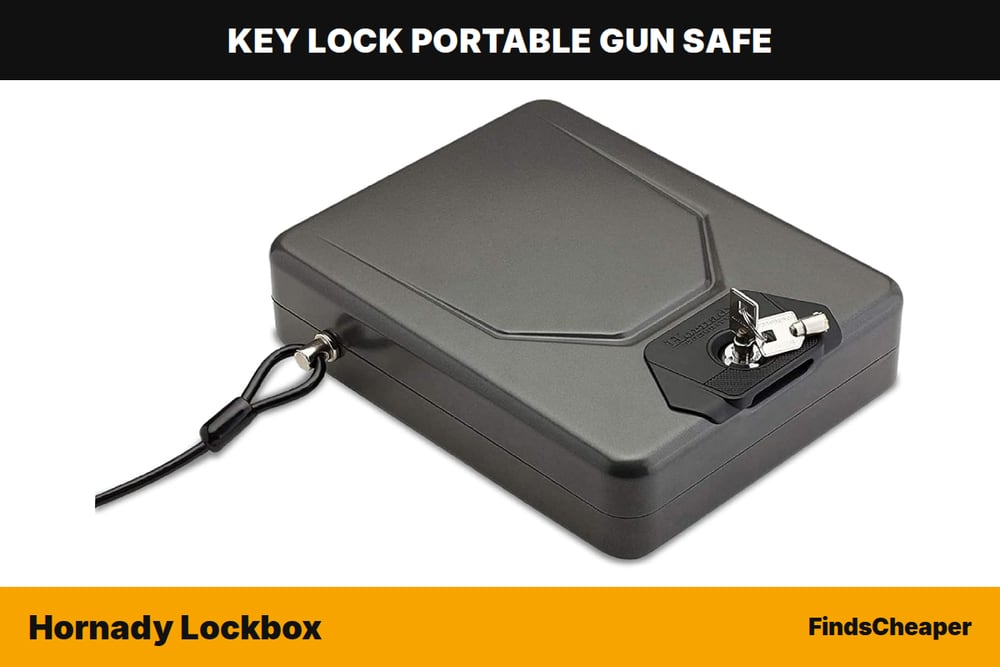
The listing describes this as the Alpha Elite Lock Box (item no. 98153) in the X Large size, with an exterior of 10.25 x 8 x 2.75 inches, sized for 1911-size pistols and 3-inch revolvers. It uses a 16-gauge steel housing, a barrel key lock and a dual crossbar latch, and it includes a steel lock-down cable that the seller rates at 1500 lb. The listing says it meets California DOJ standards and is certified child-resistant. Because it is key-only, there are no batteries to manage, which suits glove-box or under-seat use. Read our Hornady Lockbox review for the full breakdown, and check the current price on Amazon.
Vaultek LifePod 20
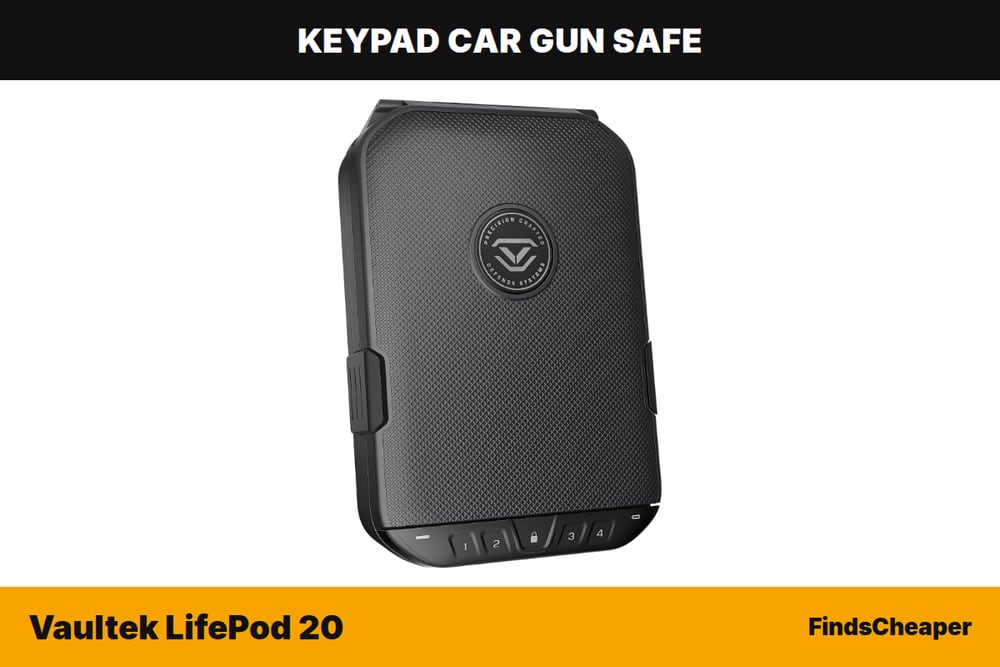
The LifePod 20 is a polymer case rather than steel. The listing says it is weather resistant, airtight and dust proof, with side compression latches and a rubber gasket, and it opens with a backlit keypad or backup keys. It holds a full-size handgun up to 9.25 inches long, has a removable tray for two layers of storage, and runs on a 9V battery with a hidden micro-USB port for emergency power. The interior dimensions differ between the bullets and the description, so confirm fit on the listing. At the time of writing it sat in the $100 to $200 range; check today’s price. Our full Vaultek LifePod 20 review covers it in depth.
Vaultek LifePod 20 Biometric

This version adds a water resistant fingerprint scanner to the keypad and backup keys, with the same tray, cable, 9V power and micro-USB backup described for the standard LifePod 20. It sat in the $200 to $300 range at the time of writing, so it costs more for the fingerprint option. If you are weighing biometric access, note that several other brands’ biometric safes were recalled because their readers could let unauthorized users open them; see our biometric gun safe recall guide for the background. More detail is in our LifePod 20 Biometric review.
Common anchoring mistakes to avoid
- Using only one or two of the factory holes when the safe has four.
- Screwing into subfloor or drywall without reaching concrete or framing.
- Drilling the factory holes larger to fit hardware you already own.
- Leaving bolt heads or brackets exposed outside the safe.
- Skipping a check for heat tubing, plumbing or post-tension cables.
- Forgetting to level the safe, which leaves the door binding or swinging open.
- Leaving a portable case’s cable unlocked or looped around something that can be lifted off.
When to call a professional
Hire a safe installer or contractor if the safe is very heavy, if you suspect a post-tension slab, if the safe goes on an upper floor, or if you are not comfortable with a hammer drill. Many safe dealers offer delivery and anchoring together, and a pro will usually carry the right anchors and know how to avoid utilities. For help choosing a safe worth that effort, start with our gun safe buying guide or the best handgun safes for smaller needs.
Watch: Phil Crockett shows the process of bolting a gun safe to a concrete floor.

Finally, anchoring is one part of responsible storage. Storage and child-access laws vary by state; check yours.
How to Bolt Down a Gun Safe FAQ
How do you anchor a gun safe to a concrete floor?
Place the safe in its final spot, mark the factory holes, drill to the anchor maker’s depth with a hammer drill and masonry bit, and clean the dust out. Reposition the safe, shim it level, then install wedge or sleeve anchors through the holes and tighten to the recommended torque. Check for post-tension cables and radiant heat tubing before you drill.
Can you bolt down a gun safe on a wood floor?
Yes, but aim for the floor joists rather than the subfloor, which holds very little on its own. Find the joists, align at least two factory holes over framing if you can, and use long lag bolts with pilot holes. If holes miss the joists, through-bolt the safe with large washers or a backing plate under the floor.
How do you secure a gun safe in a car?
Most portable car safes include a steel cable. Loop it around the seat frame or seat rail bracket and lock the end inside the case so it cannot be slipped off. Some brands also sell vehicle mounting brackets. Avoid drilling into the vehicle unless you know what wiring, airbag parts or fuel lines are behind the panel.
How do you secure a safe in an apartment without drilling?
Ask your landlord first, since many allow a few anchor holes if you patch them later. Without drilling, cable a portable safe to a fixed pipe or heavy furniture, bolt a small safe inside a nightstand or cabinet, and place it in a closet corner where it is hidden and harder to pry. A compact safe is easier to secure this way.
Should a gun safe be bolted to the wall too?
For tall rifle safes and gun cabinets, adding bolts through the back into at least two wall studs is a good idea even when the base is anchored. It helps prevent tipping when the door is open and adds resistance to prying. Small pistol safes can be wall mounted on their own if they are fastened into studs, not just drywall.
What size bolts do I need to anchor a gun safe?
Use the size and type your safe’s manual specifies, and match the bolt diameter to the factory anchor holes rather than drilling them larger. Many brands sell anchor kits made for their own safes. On concrete, wedge or sleeve anchors are standard; on wood, use lag bolts long enough to reach well into the joist or stud.
FindsCheaper is reader-supported: as an Amazon Associate we earn from qualifying purchases, at no extra cost to you. We research listings, manuals and owner feedback; we do not accept payment for placement. Prices, coupons and availability change, so check Amazon for the current details. Store firearms safely and follow your state’s storage laws.


One Comment